Scriabin Op. 13: Why These Six Tiny Preludes Feel Like a Whole Universe

Introduction
If you have ever heard a short piano piece that somehow feels like a full movie scene, you already get the vibe of Scriabin.
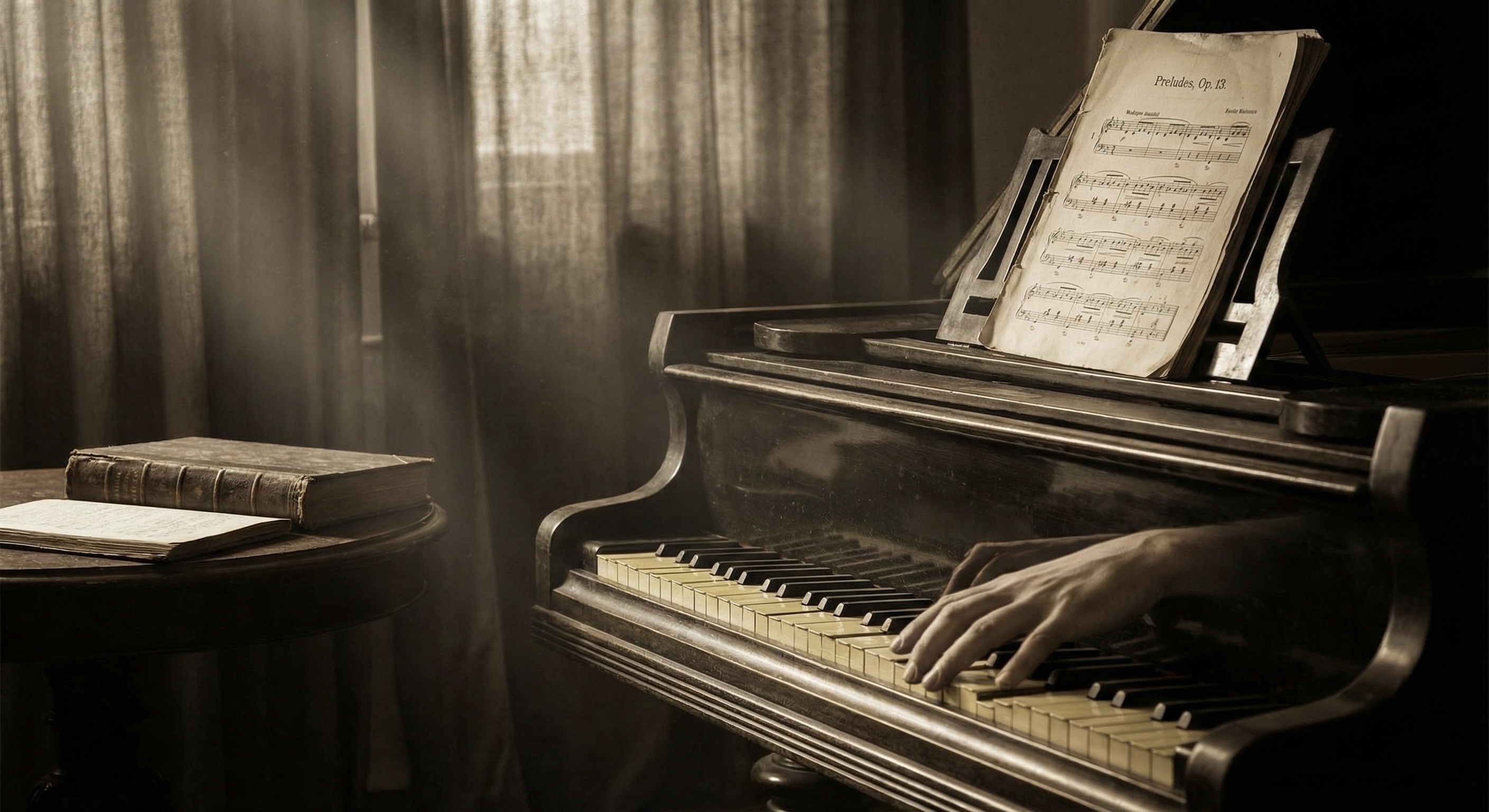
Scriabin’s Six Preludes, Op. 13 are short, concentrated, and deceptively simple on the surface. But inside, they are packed with harmonic moves that constantly shift the ground under your feet. That is why they are so satisfying to listen to and so hard to play well. You cannot hide behind speed. You cannot fake the atmosphere. Every chord matters, and your pedaling choices either reveal the logic or turn everything into fog. I explored this exact world in my graduate thesis when I graduated from Tongji University in China, and the more I lived inside these six miniatures, the more they felt like a complete universe compressed into minutes. My thesis digs deep into the harmony and Pedaling analysis of his Six Preludes, Op. 13. If you want to take a look of my complete thesis, it is right below:
This post breaks down what makes these pieces sound so mysterious, what the harmony is doing, and why the pedal is basically your secret weapon.
First, who was Scriabin &
why does he sound like this
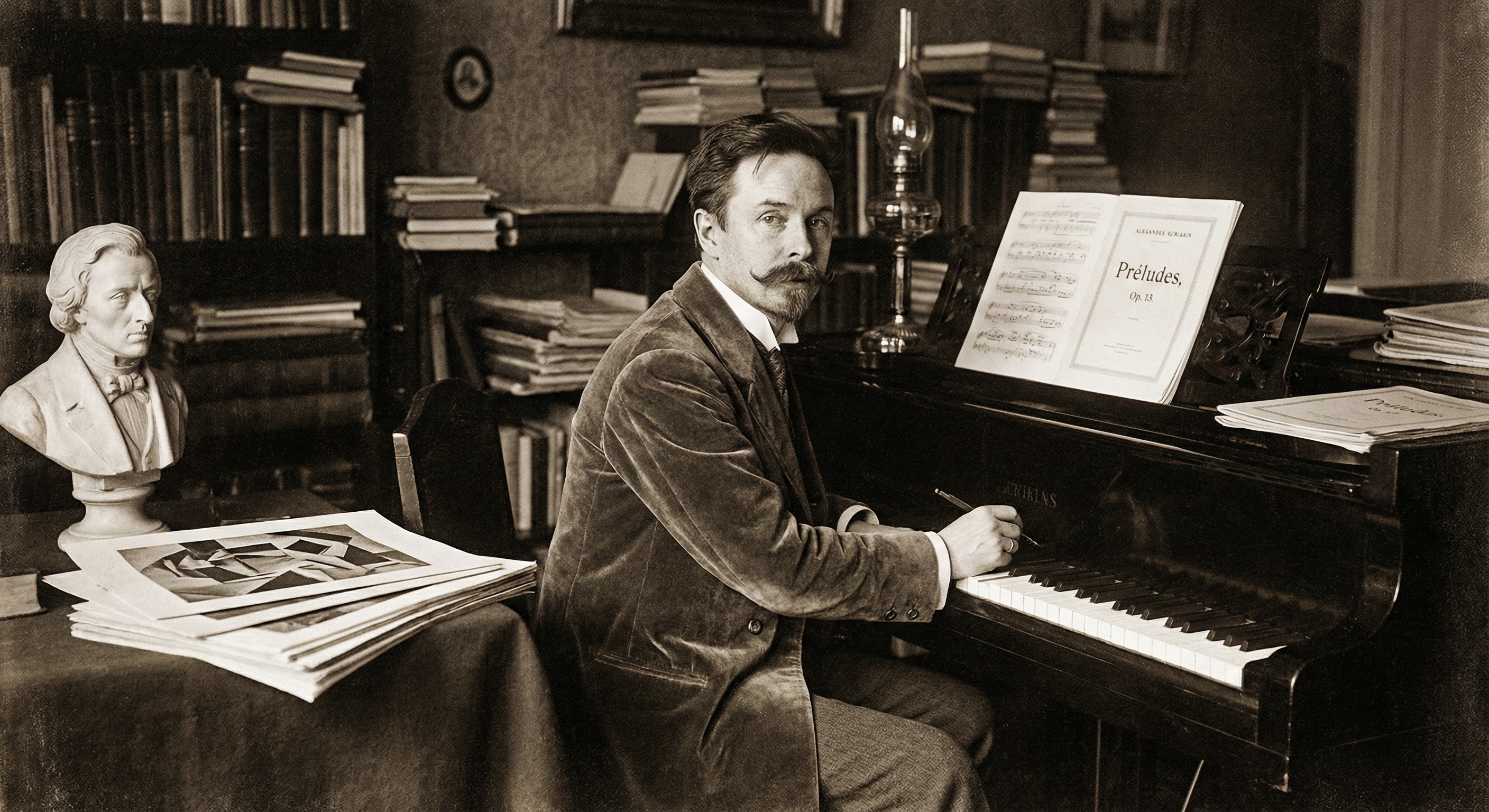
Scriabin was a Russian composer-pianist who started in a very Chopin-influenced Romantic language and gradually pushed toward a more experimental sound world. Op. 13 sits early in that journey, which makes it a perfect entry point. The pieces still feel familiar enough to follow, but you can already hear him leaning into unstable harmony, strange color, and a kind of psychological intensity that later becomes his signature.
Think of it like a filmmaker who begins in a classic style, then starts messing with lighting, camera angles, and pacing. The story still works, but the vibe becomes more hypnotic and less predictable.
Why Op. 13 feels clear in form but intense in meaning
One reason these preludes are approachable is that the forms are usually clear. You often get short phrases, balanced sections, and endings that feel like a final breath. The architecture is not complicated.

That simplicity is not a weakness. It is the point. When the structure is clean, your ear pays more attention to harmony and color. It is like a minimalist room where one unexpected object becomes instantly dramatic. Scriabin uses simple forms as a frame so his harmonic imagination can be the main character.
The biggest harmonic habit: bass lines that step downward
Here is one of the core ideas that explains why these preludes feel slippery: Scriabin loves bass motion that moves down by small steps. Instead of the most traditional, obvious harmonic gravity, he keeps sliding the foundation down by half steps and whole steps.
Why does that matter?
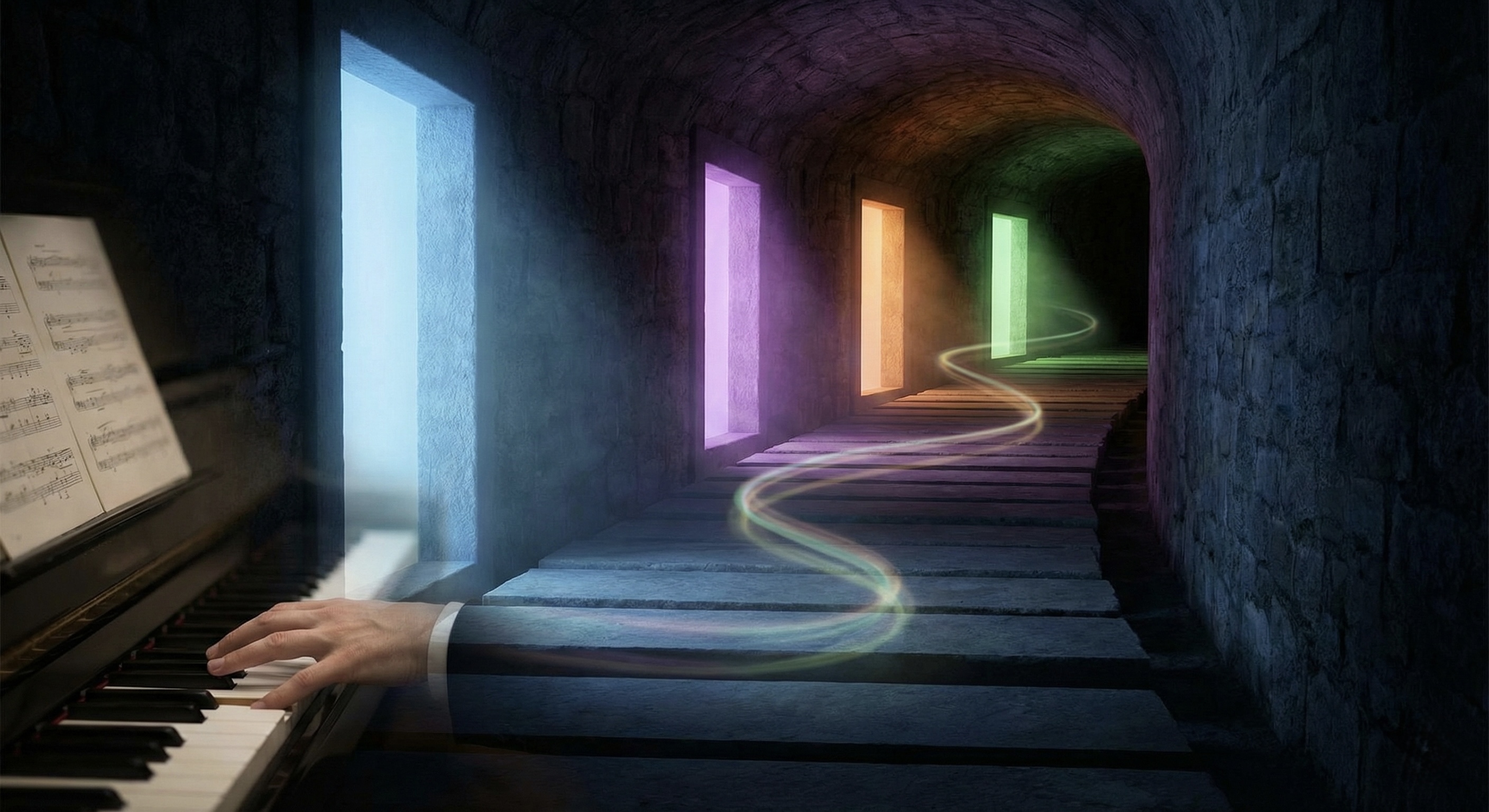
Because stepwise bass motion makes the key center feel less stable. Your ear still senses direction, but it is not the usual strong pull of textbook harmony. It feels like moving through a hallway where each door leads to a slightly different lighting color. You are traveling, but the destination keeps shifting.
For performers, this changes how you phrase. You cannot just ride the normal dominant-to-tonic drama. You have to shape the harmonic drift intentionally so the listener feels emotional logic even when the tonal center is blurred.
The color habit: chords built from stacked fourths

Another Scriabin fingerprint that shows up in Op. 13 is quartal harmony, meaning chords built by stacking fourths rather than the typical thirds. It is not everywhere, but when it appears, it is like a flash of neon in a mostly candle-lit room.
Quartal sonorities often sound open, dark, and ambiguous at the same time. They are less about function and more about color. In modern terms, it is like when a soundtrack stops being melody-driven and turns into atmosphere. The harmony becomes texture.
What is important is not just noticing these chords, but treating them as special moments. If you play them like ordinary harmony, they will not feel like a color shift. They will just feel strange for no reason. Your job is to make the listener feel that this was intentional, not accidental.
Now the real issue: pedaling is the difference between magic and mud
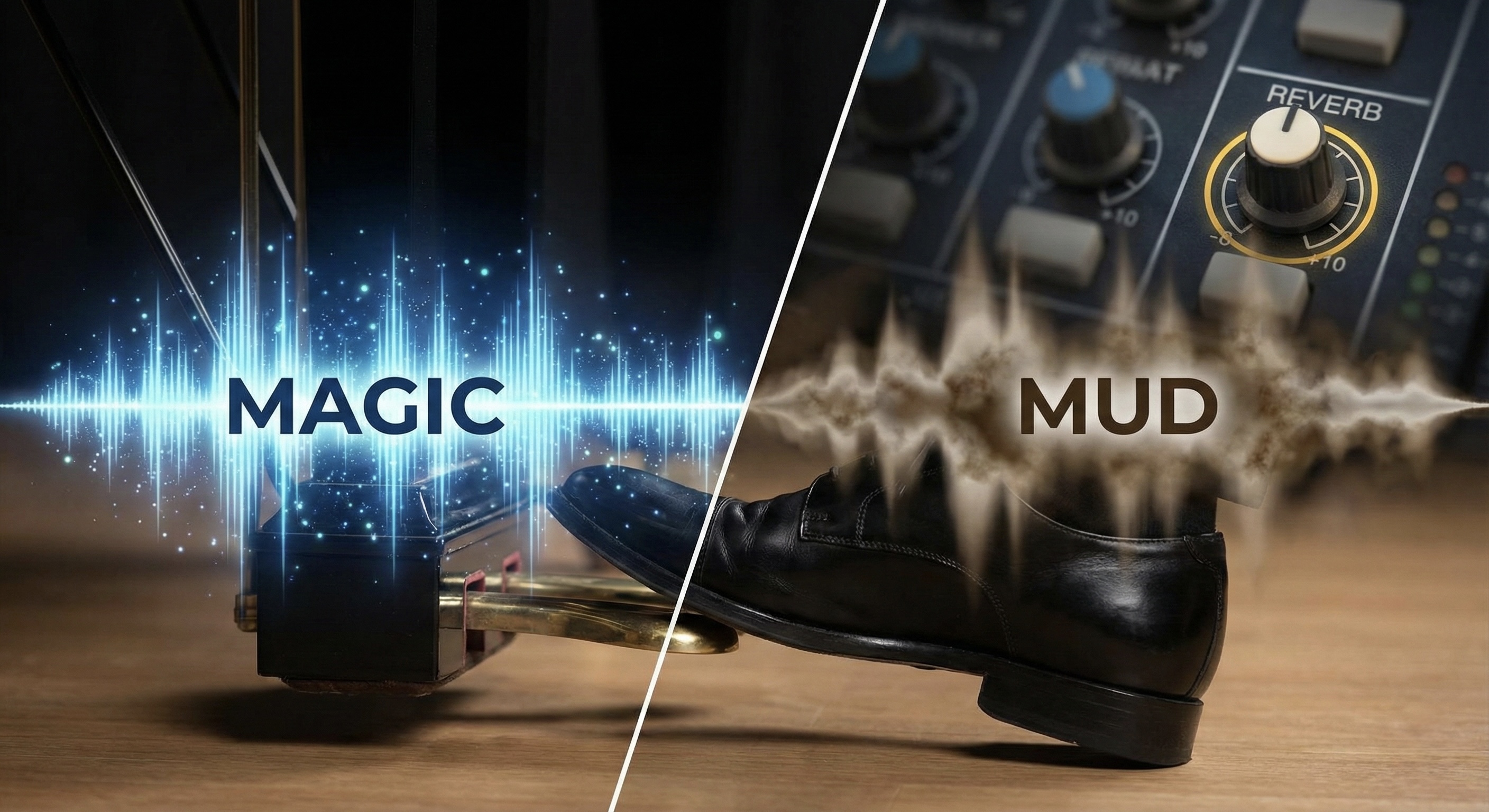
Here is the brutal truth: Scriabin often gives you very little direct pedaling instruction in these preludes. That means you cannot rely on the score to save you. You have to make decisions.
And those decisions matter more here than in many Romantic pieces, because Scriabin’s harmony already tends to blur. If you pedal the way you might in a big Chopin nocturne, you can destroy the harmonic clarity and cover the melodic line. You get mush.
A good modern analogy is audio production. Sustain pedal is like reverb. Reverb can make sound bigger, warmer, and more emotional. But if you drown everything in reverb, you lose definition. The mix turns cloudy. In Scriabin, pedal is part of the harmony, not just decoration.
So the whole pedaling challenge in Op. 13 is this:
How do you keep resonance and atmosphere without smearing the harmony or hiding the melody?
Pedal problem 1: seconds and close textures
Scriabin loves close intervals, especially seconds. They create tension, glow, and emotional bite. But close intervals also create quick acoustic mess if your pedal is careless.
In these moments, pedaling has to be rhythm-smart. You cannot pedal like a blanket. You need timing that matches the rhythmic profile of the phrase. If the melody has short notes or delicate motion, too much pedal will erase its shape.
The solution is usually not no pedal. The solution is quick, precise changes that support the line rather than covering it. Think of it as editing rather than painting. You are making clean cuts so the musical sentence stays readable.
Pedal problem 2: color chords that should pop
When a quartal chord or unusual color sonority appears, your pedal can either spotlight it or bury it.
To spotlight it, you need enough resonance for it to feel like a color event, but you also need a clean enough pedal change so the chord identity is not contaminated by the previous harmony. Often the difference is one well-timed pedal lift.
If you are unsure, test yourself like this:
- Play the passage with generous pedal and listen for blur
- Then play with very clear pedal changes and listen for structure
- Then find the middle: clear harmony, but still atmospheric
That middle zone is Scriabin territory.
Pedal problem 3: functional harmony still needs clarity
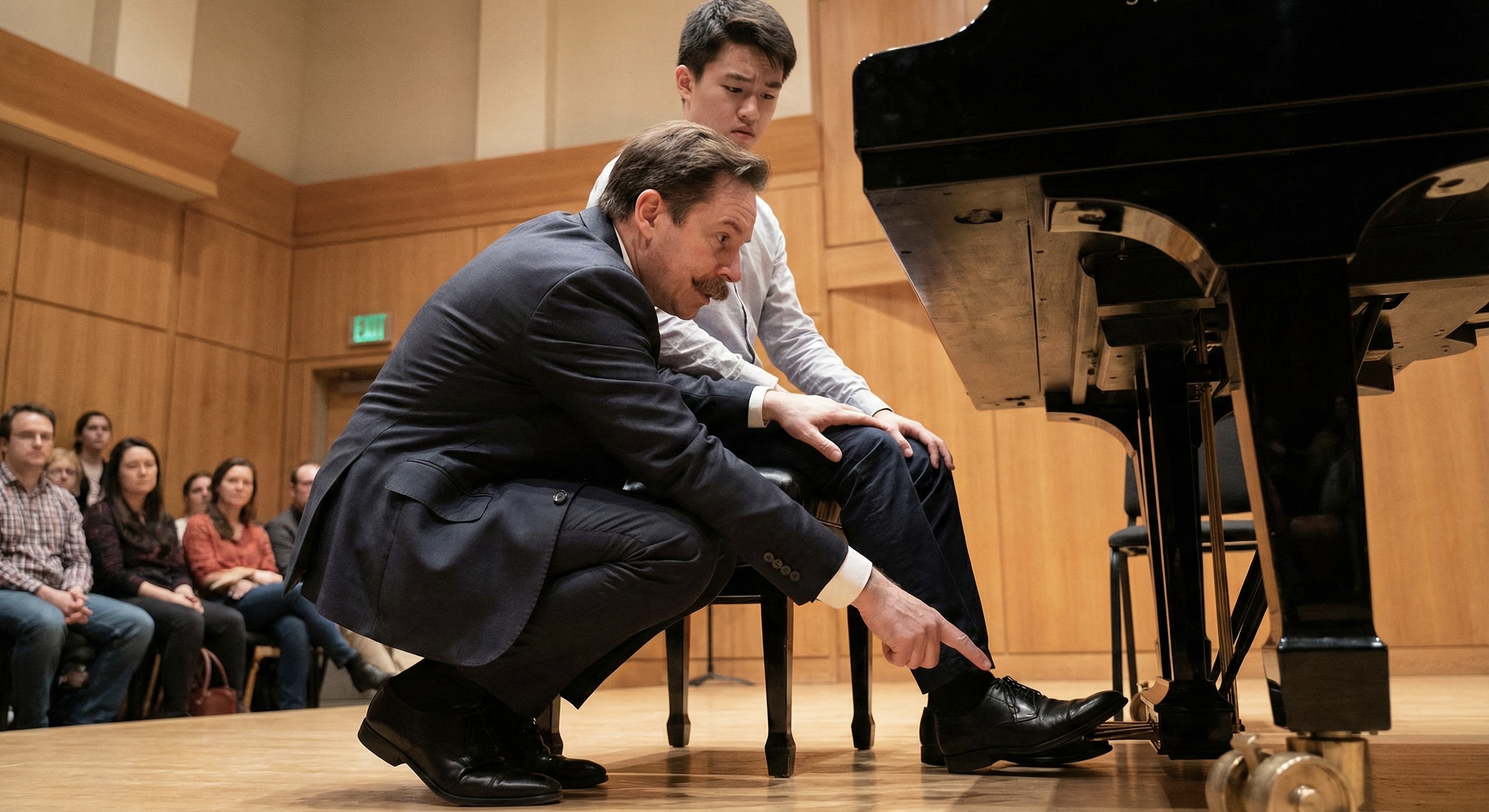
Even though Scriabin is drifting toward more ambiguous language, Op. 13 still has plenty of moments where functional harmony matters. In those passages, pedal should follow meter and texture, not emotion alone.
This is where many pianists get lazy. They feel the mood and they pedal for mood, but the harmony is still doing real work underneath. If you smear the harmonic rhythm, you remove the tension-release pattern that makes the phrase feel alive.
In other words, pedaling is not a separate layer you add after learning the notes. It is part of harmonic meaning and phrasing.
What these six preludes teach you as a pianist
Op. 13 is not just a set of pretty miniatures. It is a training ground for a modern kind of musical thinking.
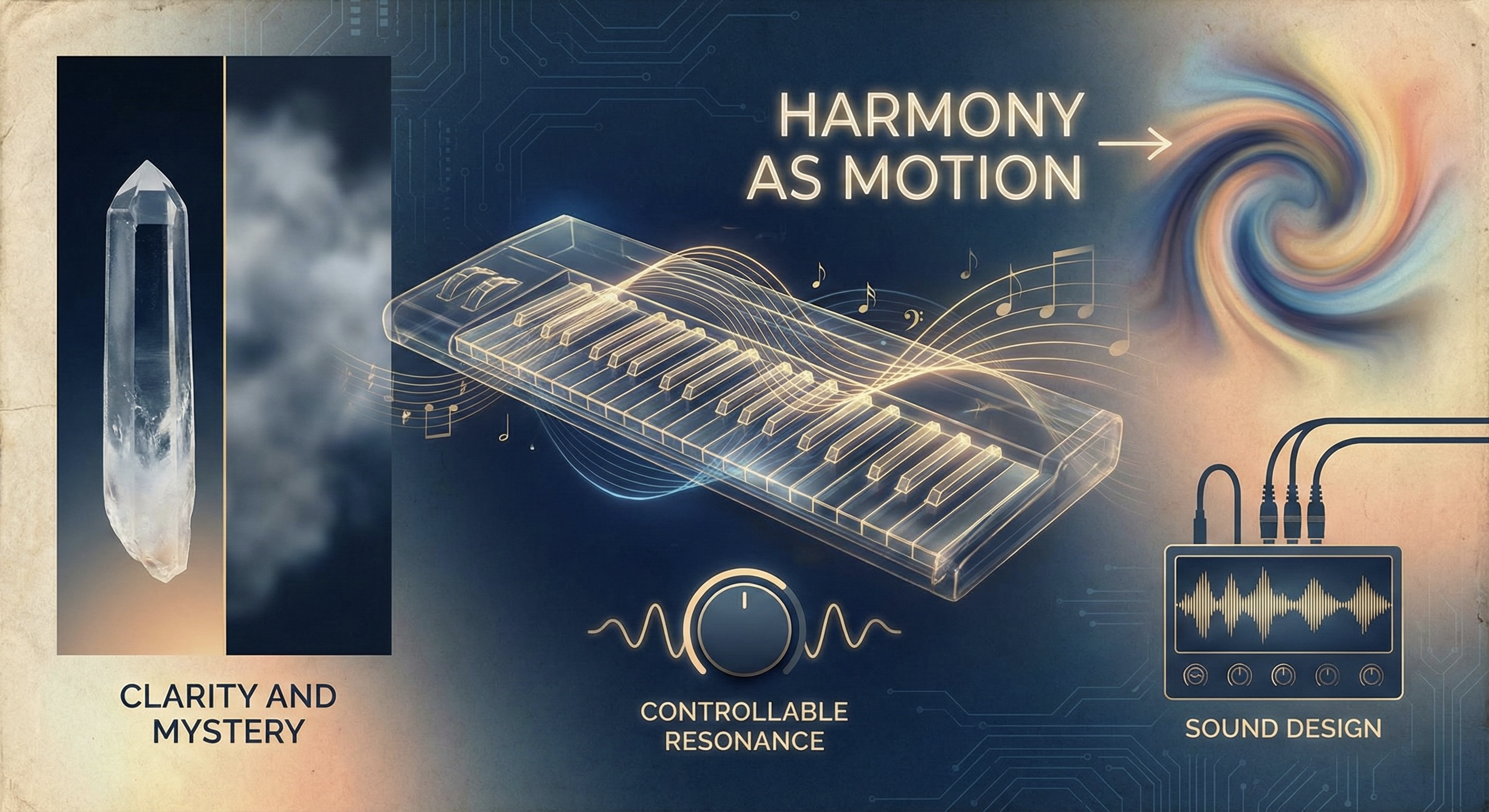
It teaches you to hear harmony as motion rather than labels.
It teaches you that resonance is a controllable parameter, not a lucky accident.
It teaches you how to balance clarity and mystery at the same time.
This is why Scriabin can feel weirdly modern. He is basically doing sound design using harmony and pedal. Long before synthesizers and plugins, he was experimenting with how resonance, spacing, and harmonic ambiguity can shape emotion.
Scriabin’s legacy, in a modern mindset
Scriabin is often described as mystical, philosophical, even obsessed with spiritual transformation. But here is a grounded way to interpret that legacy: he was trying to engineer altered experience through sound.
In current terms, he cared about immersion. He wanted harmony to feel like atmosphere. He wanted musical time to feel elastic. He wanted the piano to feel like a space you enter, not just an instrument you hear.
That is why Op. 13 still hits today. If you grew up with film scores, ambient playlists, game soundtracks, and cinematic production, Scriabin’s harmonic world makes sense. It does not need a lecture first. It is emotional, immersive, and psychologically sharp.
And if you are a pianist, these preludes challenge you in the most honest way: they force you to control your sound like a creator, not just execute notes like a machine.
More from D·Hub
Explore more stories and insights from us.







Lorem ipsum dolor sit amet, consectetur adipiscing elit. Suspendisse varius enim in eros elementum tristique. Duis cursus, mi quis viverra ornare, eros dolor interdum nulla, ut commodo diam libero vitae erat. Aenean faucibus nibh et justo cursus id rutrum lorem imperdiet. Nunc ut sem vitae risus tristique posuere.
Lorem ipsum dolor sit amet, consectetur adipiscing elit. Suspendisse varius enim in eros elementum tristique. Duis cursus, mi quis viverra ornare, eros dolor interdum nulla, ut commodo diam libero vitae erat. Aenean faucibus nibh et justo cursus id rutrum lorem imperdiet. Nunc ut sem vitae risus tristique posuere.