
Beyond Borders: The Aspiring Musician’s Guide to Studying Abroad


Introduction
In our globalized world, studying abroad has become a vital pathway for young musicians to broaden their horizons and elevate their artistry. Whether you choose the United States, Germany, the UK, or elsewhere, every region offers a unique artistic atmosphere and teaching philosophy.
Drawing from my own experiences studying and performing in Hong Kong, the United States, and Europe, this guide offers practical advice and insider tips to help you navigate the journey of pursuing your musical dreams overseas.
Phase 1: Choosing Your Path (US vs. Europe)
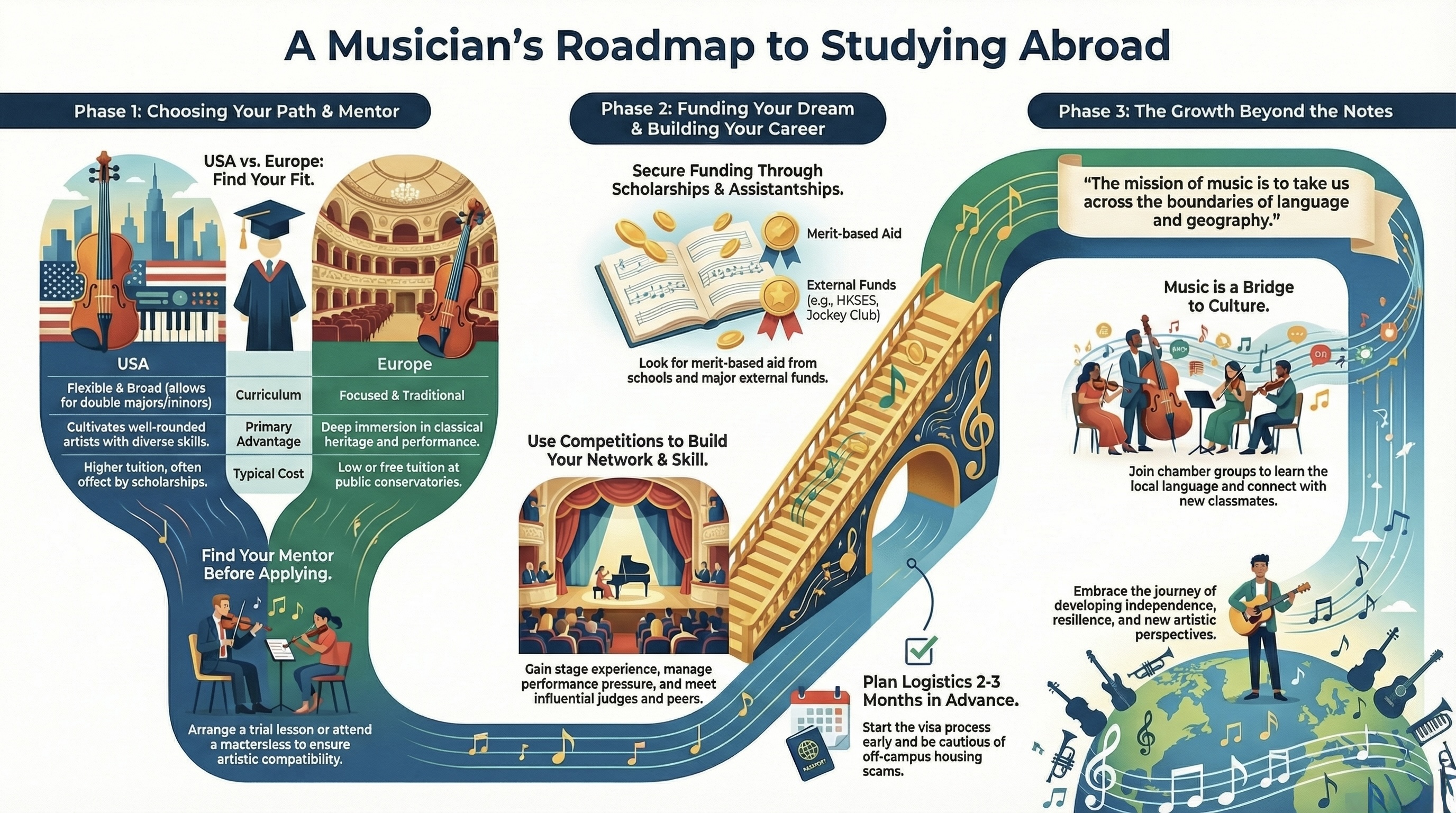
Before formally applying, I usually browse the school’s official website or contact friends/alumni already studying there to get a preliminary understanding of the audition repertoire requirements, language thresholds, and expected development direction. If there is an opportunity, you might try communicating with your preferred professors via email or online meetings first. Ask for their advice on repertoire selection or technical training, and inquire if it is possible to arrange a trial audition or a short-term lesson to personally experience the teacher’s teaching style. I went through this process when applying to American music conservatories; some professors are very willing to consult with you beforehand, thereby avoiding a situation of "incompatible musical philosophies" after arriving at the school.
Option A: The United States (Flexibility & Breadth)
US Institutions
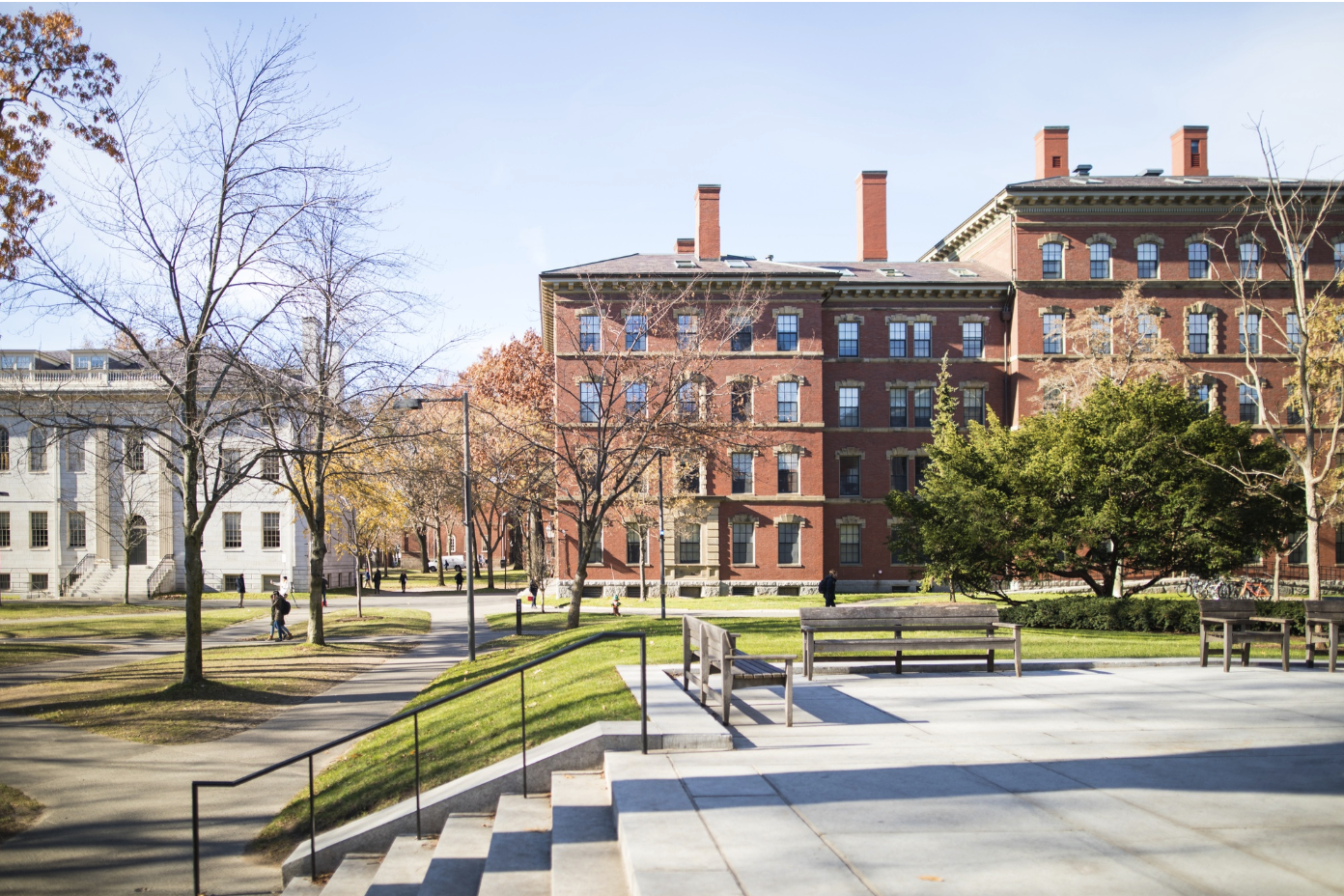
American music conservatories are known for their diversified and flexible curriculum designs, especially as they usually require students to take some subjects outside of music (Other Requirement Credits), such as humanities, science, sociology, or language courses. This system aims to cultivate students' comprehensive literacy, allowing musicians to not only have attainments in art but also possess a broader vision and critical thinking abilities.
During my time at the Cleveland Institute of Music, I took courses such as Japanese and Astronomy. These subjects, which seemed unrelated to music, gave me new inspirations in cultural understanding and logical thinking. For example, Japanese class helped me understand Japanese musical culture more deeply, while Astronomy expanded my imagination of the universe and natural order; these indirectly influenced my musical interpretation and creative inspiration.
Furthermore, during my first year of doctoral studies at the Indiana University Jacobs School of Music, I took courses in Music Psychology, Arts Administration, and Computer Programming Science. Music Psychology explored deeply how music affects human emotions, memories, and behaviors. This course gave me a more profound understanding of the audience's psychological reactions and helped me consciously use timbre changes and emotional expression to move the audience during performances. Arts Administration familiarized me with the operational models of the cultural industry and laid the foundation for possibly entering the arts management field in the future; meanwhile, Computer Programming Science inspired my interest in combining technology and music, such as using coding to create electronic music or design digital teaching tools.
The flexibility of American music conservatories is also reflected in the fact that students can choose combinations of majors and minors. For instance, in addition to majoring in piano performance or composition, you can minor in business, arts administration, or other related fields. Some schools even offer opportunities for students to Double Major. This is an excellent choice for students hoping to enter music education, cultural management, or creative industries in the future. Overall, the diversified system of American music conservatories not only broadened my knowledge base but also allowed me to find inspiration in different fields, further enriching my musical expression. If you are interested in interdisciplinary learning, the flexible system of American music conservatories will be a very ideal choice.
Option B: Germany, Austria, & The UK
(Tradition & Focus)
If you love classical music traditions and hope to immerse yourself in Europe's profound cultural heritage and historical atmosphere, then music conservatories in Germany, Austria, or the UK are choices well worth considering. German and Austrian music conservatories are famous for their rigorous and systematic teaching systems, having extremely high requirements for performance techniques, chamber music training, and repertoire interpretation. However, a certain level of German proficiency (such as B1 or B2) is usually required when applying, so it is recommended to prepare for language exams in advance. Additionally, the low tuition fees of German public music conservatories are a major advantage for students with limited budgets, but competition is relatively fierce, and the admission process is also stricter.
The UK is famous for top institutions like the Royal Academy of Music and the Royal Northern College of Music. Their teaching systems are rigorous and emphasize performance opportunities. UK music conservatories usually provide abundant collaborative performance resources, such as working with local orchestras or participating in various music festivals. For students hoping to further improve their stage experience and build a professional network, the UK is a very ideal study destination.
Regardless of which country you choose, it is recommended to carefully browse the target institution's official website first to understand details such as curriculum setup, language requirements, and audition repertoire. At the same time, you can also ask for advice from seniors or peers who have attended that school to evaluate whether your abilities suit the school's requirements and whether the school can support your long-term plans.
Phase 2: Language and Culture: Prepare an "Integration" Mindset in Advance
2.1 Use "Basic Conversation" to Break the Ice:
Start with Common Phrases
For many music students arriving in a foreign land for the first time, it is not always possible to undertake short-term studies at a local language school before the semester officially begins. Just as I did initially, the main thing is to proactively learn some common daily conversations or polite phrases and try to mimic the intonation and expression habits of locals, for example:
- When ordering at a supermarket or coffee shop, memorize relevant vocabulary and short sentences beforehand.
- When interacting with roommates or classmates, use the local language to say short greetings, such as "Hello," "Thank you," "I would like...," etc.
- Observe surroundings: Listen to how others use facial expressions or tones in different situations and try to follow along at any time.
Although these seem like insignificant small tactics, they can quickly narrow the distance between you and the environment and reduce cultural barriers. Even if not learning language in a formal classroom, you can accumulate confidence in listening and speaking through scattered daily interactions.
2.2 Use "Music" as a Bridge: Exchange Language and Culture
As a musician, you actually carry a great "communication tool" abroad: Music.It is recommended to form chamber ensembles or bands with local students. During the process of rehearsals and performances, you can hear their accents and ways of thinking, and naturally improve your language ability.If there is an opportunity, you can also exchange languages with peers before or after class—you teach them Chinese, and they teach you German, French, or English, etc. This interaction is often relaxed and efficient.
2.3 Respect and Curiosity: A Positive Mindset Toward Cultural Differences
- Cultural Customs: Things like dining etiquette and teacher-student interaction patterns are worth paying attention to and respecting. When you are unfamiliar at the start, observe how others do it and follow along when it is safe to do so.
- Avoid "Self-Limitation": Do not be afraid to interact with people just because your language is not fluent at the beginning; most people will be friendlier and enthusiastic to help when they meet a foreign student willing to make an effort to communicate.

Phase 3: Connecting with Ideal Faculty: Trial Lessons and Masterclasses
3.1 Contact Early and "Trial Lessons": Understand Teaching Styles
Before choosing whether to apply for a certain professor's class, if conditions permit, it is best to contact the professor via email, social media, or the assistance of school administrative staff, and ask if a "Trial Lesson" or online consultation can be arranged.
- Piano, Vocal, or Orchestral Instruments: The most common form is to personally go to the professor's studio to play/sing a few repertoire segments to feel the professor's teaching approach, style, and their feedback on your potential.
- Preparation: Before the trial lesson, decide which pieces to present. It is recommended to choose segments you are most skilled at to fully demonstrate your technique and musicality; at the same time, you can prepare some repertoire sections where you are weaker to absorb the professor's advice.
3.2 Utilize Masterclasses: Absorb Diverse Guidance and Expand Network
Masterclasses are a common learning format in music academies or music festivals, and they are also the fastest channel to understand a professor's style.
- Sign up to participate: If you can become an Active Participant, there will be direct student-teacher interaction. But if slots are limited, being a Passive Participant (auditor) can also teach you a lot.
- Compare multiple masters: Different professors or performers have unique musical views. Listening to several masterclasses can expand your interpretative dimensions and avoid the limitation of "walking only one path."
- Build connections: After the masterclass, you can appropriately exchange contact information with the teacher or fellow students. Sometimes these newly met friends may come from the institutions you want to apply to in the future and can provide more first-hand information.
3.3 Start with Online Lessons: Dual Exploration of Technique and Culture
If you cannot visit in person, you can also conduct one-on-one lessons via the internet or record videos for the professor to evaluate.
- Specialized Platforms: Some professors will reveal information about arranging "online trial lessons" on their own websites, YouTube, or specific online teaching platforms; you might try applying via email.
- Video Exchange: You can record high-quality performance videos for the professor, letting them point out directions for improvement for you; afterward, re-record based on their advice or perform live in class, forming a virtuous cycle.
3.4 Mentorship Relations: Cultivation of Skills and Artistic Concepts
Connecting with ideal faculty is not just about one lesson. Usually, in a music conservatory, you spend a long time with your major professor, and their playing style and teaching philosophy will deeply influence your musical thinking.
- Avoid "Following the Herd": Ultimately, how to interpret a work still comes back to your own compatibility; if the advice given by the professor conflicts with your inner artistic concepts, you can discuss rationally with the teacher or ask for other teachers' opinions.
- Balance "Technique" and "Musicality": If you face the correction of a large number of technical flaws at the beginning (fingering, tone color, pedal usage, etc.), do not feel down due to frustration. Professional guidance can accelerate the improvement of your playing habits, laying a solid foundation for future musical performance.
Phase 4: Scholarships and Financial Planning: Seek Resources from Multiple Channels

The cost of studying music abroad is relatively huge. Besides considering tuition, expenses like airfare, living costs, instrument maintenance, transport or purchase, and exam travel expenses are often not small figures. If you can master multiple financial resources and plan early, you can often greatly reduce economic pressure, allowing you to focus on music study and performance with fewer worries. Beyond tuition, one must pay attention to living expenses and instruments. Before applying, not only should you query the institution's Merit-based Scholarship or TA (Teaching Assistantship), but you should also watch for other aid, such as:
- Music talent grants provided by private foundations or corporations.
- International cultural exchange scholarships from various levels of government.
- Subsidies from overseas expatriate organizations or alumni associations.
In public music institutions like those in Germany, tuition may be lower than in the US, but German language ability and exam competition cannot be underestimated. If you can contact teachers and demonstrate your strength before admission to win their recommendation, it will also increase the chance of obtaining financial aid.
The following specifically introduces four scholarship schemes that are deeply concerning to Hong Kong students, for reference:
1. Hong Kong Scholarship for Excellence Scheme (HKSES)
- Official Website: Click [Here]
- Suitable Candidates:
- Students with right of abode or right to land in Hong Kong.
- Planning to study Bachelor’s or Postgraduate programs at "world-renowned universities."
- Must meet the service period requirement of returning to Hong Kong during study or after graduation.
- Funding Scope:
- Annual tuition subsidy of up to HKD 300,000.
- If the means test is passed, an additional bursary of up to HKD 200,000 per year can be applied for to assist with living and other study expenses.
- Application Key Points:
- Selection criteria include academic results but also place great importance on the applicant's leadership potential and commitment to Hong Kong society.
- It is recommended to prepare necessary documents (admission offer, reference letters, personal statement, etc.) before the deadline.
- The annual quota is limited and based on merit; it is recommended to start preparations as early as possible.
2. Sir Edward Youde Memorial Fund Overseas Scholarships
- Official Info: Click [Here]
- Suitable Candidates:
- Hong Kong full-time students planning to pursue undergraduate or postgraduate studies overseas.
- Possess good academic performance, extracurricular participation, and passion for social service.
- Funding Scope:
- The scholarship amount generally covers part of the tuition and living expenses, depending on the annual assessment and application situation.
- Application Key Points:
- Applicants need to provide documents including academic transcripts, reference letters, and a personal profile for judging.
- Encourages and supports outstanding Hong Kong students to further their studies overseas and contribute to local society after returning.
3. The Hong Kong Jockey Club Music and Dance Fund’s Van Ritten Yung Music Fund
- Official Info: Click [Here]
- Suitable Candidates:
- Aged 25 or below (as of August 31, 2024).
- Chinese nationality, Hong Kong permanent resident, and typically residing in HK for seven consecutive years.
- Have obtained proof of admission to an overseas university or music conservatory for 2024/25.
- Funding Scope:
- Provides scholarships for young Hong Kong musicians to further studies overseas; must return to HK to contribute to the local music scene after completing the course.
- Application Key Points:
- Scholarship recipients must return to HK immediately after completing the course to contribute to the HK music industry.
- Applicants need to fill out the application form and submit relevant documents to the Hong Kong Cultural Centre Administration Building.
4. CASH Music Fund
- Official Info: Click [Here]
- Suitable Candidates:
- Hong Kong residents holding a valid HK Identity Card.
- Ideal age is 30 or below.
- Local university undergraduate graduates majoring in music.
- Funding Scope:
- Provides financial aid to students aspiring to further studies overseas, for pursuing postgraduate courses (majoring in composition). Generally, recipients can receive a scholarship of up to HKD 200,000 for one academic year.
- Application Key Points:
- Applicants need to possess excellent composition ability and potential.
- The scholarship is designed for composition courses at the postgraduate level to nurture a new generation of composition talents.
Phase 5: Performances and Competitions: Mastering the Stage is the Fastest Shortcut to Growth
To achieve rapid improvement in music performance, besides formal courses and personal practice, the most effective way is to get on stage more and participate in competitions more, honing your skills and mindset through combat experience. During competitions, you will encounter opponents and judges of different nationalities and styles, learning to adjust your performance in a diverse environment. This includes stability on the spot, command of the stage, and the ability to respond to pressure and unexpected situations. The following will provide some strategies for finding well-known competitions and explain why actively fighting for competition and performance opportunities is so important.
How to find competitions with international renown?
1. Utilize the Alink-Argerich Foundation (AAF)
The Alink-Argerich Foundation Official Website and the competition guide published by the foundation are important resources for musicians to search for major global piano events (and other music competitions).This website collects information on piano competitions around the world, including dates, locations, repertoire requirements, age limits, jury lists, and registration methods. The official site updates the latest news or adds new competition information every week.If you are carefully selecting a competition that is renowned and matches your level, you might first filter conditions on the AAF website (e.g., by region, date), list potential competitions to enter, and then further check past winners and historical data to evaluate the competition's level of competitiveness and prestige.
2. Follow International Music News and Communities
International music-related media, associations, or communities (such as Facebook, Instagram, LinkedIn, online forums, etc.) also often share first-hand competition information.
- Distinguish carefully: If it is a "new type of competition" you are hearing of for the first time, check the official website or recognized platforms like AAF to further verify its authenticity and history to avoid signing up for a competition lacking credibility.
3. Start from Institution or Mentor Word-of-Mouth
Your music institution, guiding professors, and seniors or friends who have participated in related events are all good sources of "internal intelligence." They may know which competitions are the most indicative, hold high value, or have a pure atmosphere.Choosing reliable competitions with high judging standards not only means strong competitors but also allows you to obtain authoritative evaluations, adding persuasiveness for future participation in more international performances or music conservatory applications.

Phase 6: Why is Fighting for Competition and Performance Experience So Important?
- Cultivate Stage Presence
No classroom or rehearsal can completely simulate the lighting, sound, and audience pressure of a formal stage. Through actual competitions and performances, you can quickly accumulate on-the-spot experience and learn to remain calm and perform at your best level under unexpected circumstances.
- Make International Connections and Friends
Competitions usually gather excellent musicians from all over the world. You can meet many enthusiasts, seniors, or music professionals from other fields here. The feedback or advice they give can often bring new performance inspiration, repertoire interpretation concepts, or future collaboration opportunities.Proactively interacting with contestants and judges to leave an impression of your name and performance style helps in receiving various invitations (such as masterclasses, music festivals, recommendations for other competitions) or music resources.
- Enhance Self-Review and Goal Setting
Facing strong opponents in competitions allows you to clearly see in which aspects you still need improvement. Competition results are certainly important, but the greater harvest lies in testing your own strength and reformulating learning goals.If you can utilize the evaluations from judges or industry seniors after the competition to correspond to your technical or interpretive weaknesses and systematically improve in the next stage of practice, you can "level up" more specifically.
- Accumulate Resume and Enhance Credibility
Successfully advancing or winning awards in high-level and highly credible competitions often makes your music resume more attractive, having a great bonus effect on subsequent applications for scholarships, music conservatories, or art festivals.The more sufficient your performance experience, the lower your interaction cost with the stage, repertoire, and different occasions. You will adapt faster when receiving professional invitations in the future, displaying a mature and stable performance demeanor.
Phase 7: Adjusting Mindset: Studying Abroad is Not a "One-Person" Lonely Battle
7.1 Coexistence of Sensibility and Rationality: Breaking the Myth of "Idealized Study Abroad"
Studying abroad often starts full of romantic longing, like stepping into a "music paradise." However, besides beautiful concert halls and master guidance, one must be psychologically prepared to face challenges and pressure. In the initial unfamiliar language environment, you might not be able to express ideas completely; or when comparing with peers, you might feel a gap in performance levels.
- Suggested Actions:
- Before departure, face the fact that "studying abroad" is not purely a travel experience but a process requiring high focus and continuous effort.
- Give yourself some mental space to allow for anxiety and loss caused by the adaptation period. Release emotions through diaries, chatting with family, or meditation to reduce "self-blame."
7.2 Maintain Interpersonal Networks: "School Community" and "Local Chinese Circle" Working Together
In study abroad life, loneliness often comes from language, cultural differences, and a break in social context. Even extroverted people may feel at a loss in the early stages in a foreign country.
- Grasp On-Campus Resources: International Student Associations, music department student clubs, religious/art/language learning communities, etc., are good places to quickly build interpersonal connections. Participate in orientation activities and club gatherings to integrate into local student life.
- Get to Know the Local Chinese Community: You can look for local Hong Kong, Taiwanese, or Chinese communities on platforms like Facebook or WeChat. They can usually provide rental information, life tips, and even assist in solving language and cultural problems. Building good relationships with experienced seniors can also reduce the time spent fumbling around in the early stages.
7.3 Trust Yourself: Adjustment Methods on the Music Study Abroad Road
- Embrace the Run-in Period: Being in a foreign land, there is always anxiety about "can I keep up with the course, can I mingle with classmates" at the start. But actually, everyone has their own adaptation trajectory; there is no need to be overly anxious about the results.
- Be Brave to Seek Help: Whether it is academic problems (such as academic writing, theoretical analysis) or life needs (such as medical care, psychological counseling), the school and peers usually have relevant resources. Actively opening your mouth to ask will make it easier to get out of a predicament.
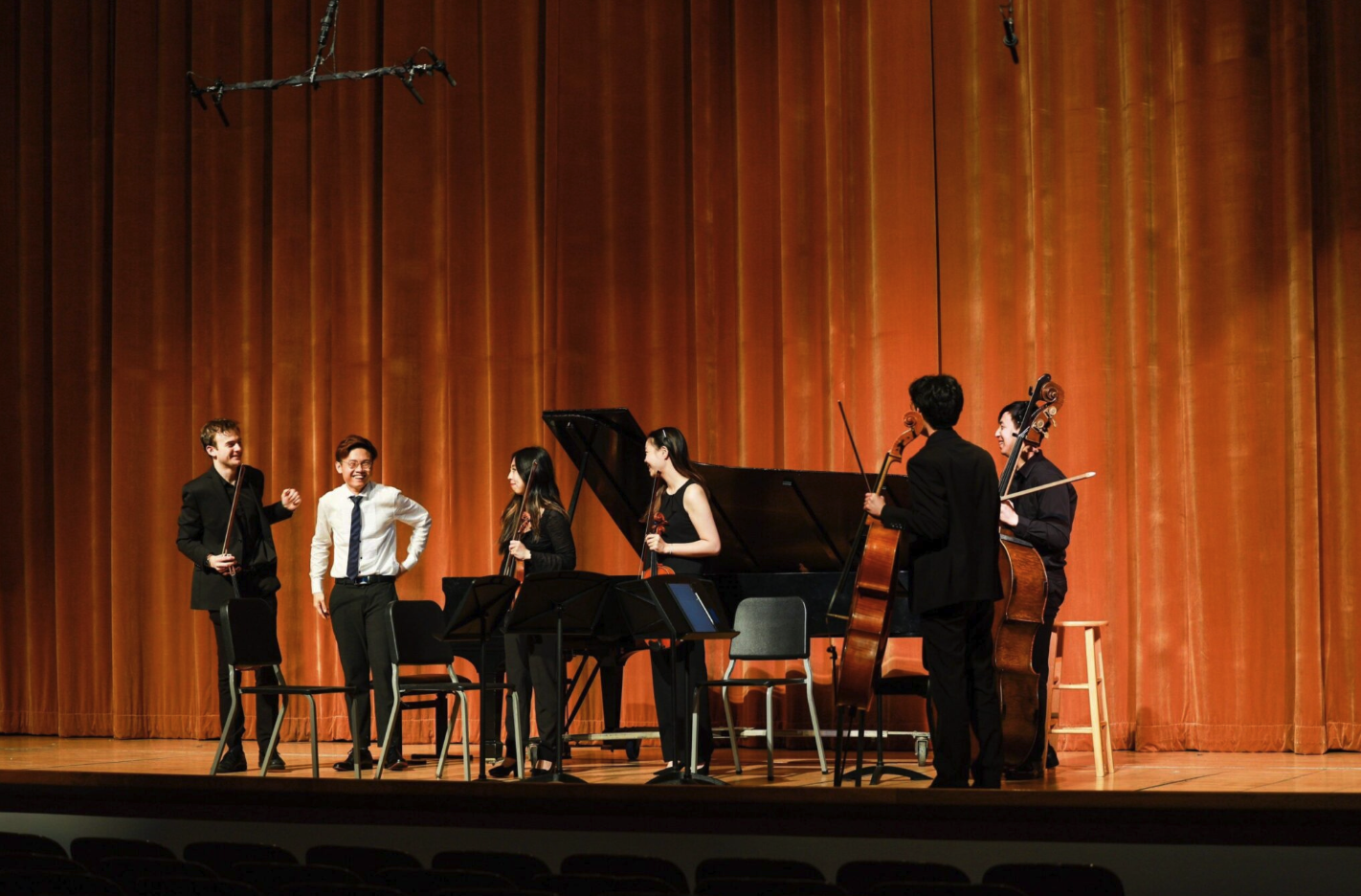
Phase 8: Pre-departure Knowledge: Review Documents, Apply for Visas, and Contact Housing
8.1 Document Preparation: Understand Requirements and Timelines1. Music Conservatory Application Materials
- Audition Video/Audio Files: Some schools require specific repertoire or formats; be sure to read the official announcement carefully.
- Academic Transcripts / Reference Letters / Personal Statement: Emphasize your passion and planning for the applied major, and showcase past performance experience or academic achievements.
- Passport and ID: Ensure validity covers the entire study period; renew early if expiring soon.
2. Visa Application
- US Visa: The common student visa is F-1. After obtaining the school's I-20, you need to book an embassy interview and prepare sufficient proof of finances and the music conservatory admission letter.
- European Region (e.g., Germany, Austria): Generally need to apply for a long-term student visa, submitting bank deposit proof, accommodation proof (if any), and insurance. Pay attention to language proficiency requirements of each country, such as German B1 or B2.
- UK Visa (Tier 4 General Student Visa): Need to provide CAS (Confirmation of Acceptance for Studies) and proof of a certain amount of living expenses.
- Suggestion: Start processing visas 2-3 months early, especially during peak seasons (around summer vacation) when review delays are more likely.
8.2 Contact Housing: The Key to Saving Money and Peace of Mind
- On-Campus Dormitories: Most music conservatories or universities provide international student dorms, including basic furniture and common spaces (kitchen, living room, practice rooms, etc.). Although fees are not necessarily the cheapest, it saves the trouble of finding a room upon first arriving in a foreign place and provides convenience for interacting with classmates.
- Off-Campus Rentals: You can query through the school's international student office, second-hand messages from student clubs, or local rental websites; if familiar alumni or fellow countrymen have spare rooms, it is also a relatively safe choice that allows sharing of life experiences.
- Note on Traps: Rental scams happen from time to time abroad. If you encounter requests like "pay a deposit first to reserve the room," be sure to verify carefully, or request an online viewing and sign a formal contract before paying.
8.3 Insurance and Health Affairs
- Medical Insurance: Some countries or schools specify that international students must buy local medical insurance; failure to provide a policy may affect registration. It is also recommended to arrange suitable travel insurance while in HK for accident protection upon arrival or during transit.
- Health Checks and Vaccines: Pay attention to specific regulations of some countries (especially the US) regarding vaccines, tuberculosis testing, etc. Missing items may lead to an inability to register smoothly when school starts.

Phase 9: Harvest from Study Abroad: Growth Beyond Textbooks
9.1 Accumulate International Vision: The Clash of Diverse Cultures
The most precious part of studying abroad is not only the technical improvement in music class but the collision with teachers and peers from all over the world.
- Cultural Exchange Opportunities: You will find that musical interpretation does not have only a single mode. Classmates from different countries and different musical traditions will bring surprising interpretation methods and musical understandings.
- Leap in Learning Mindset: In a cross-cultural environment, from rehearsals and competitions to concert preparations, what you need is an inclusive mindset, thereby growing into a musician with more tolerance and broader thinking.
9.2 Cultivate Independence: Life Management and Self-Exploration
- Self-Care: Buying ingredients and cooking three meals yourself, as well as handling daily utility bills, banking business, etc., are all important steps for you to move towards independence.
- Time and Pressure Management: School courses, daily rehearsals, and competition participation happening simultaneously force you to improve self-management abilities. Over time, you will better understand how to allocate resources and energy when facing busy schedules.
- Reflection and Calming: Leaving the familiar comfort zone allows you to see your inner needs, preferences, and strengths more clearly. Music students abroad often rethink "Why do I play" and "What kind of musician do I want to become" during this journey.

9.3 Build Long-term Networks: Expand Music Circle Possibilities
- Peer Interaction: Classmates struggling together in a foreign land often establish deep friendships and collaborative rapport. In the future, these classmates may become your partners and windows to music platforms in different countries.
- Industry Connections: Through professor recommendations or music exchange activities held by the school, you also have the opportunity to meet professionals like agents, conductors, composers, and even record companies, laying the foundation for future performance invitations, teaching position applications, or other music projects.
9.4 Feedback and New Departure: Becoming a More Complete Music Worker
Many students choose to stay locally to continue advanced studies or engage in music-related industries after obtaining their degree, while some choose to return to Hong Kong or other Asian regions to develop. Regardless of the destination, this overseas experience equips you with international vision, independent thinking, and a broader musical mind.
- Share Experiences: Returning to your alma mater or community occasions to share what you saw and heard overseas can facilitate younger students with aspirations to follow the same path to plan more effectively.
- Continuous Learning: Studying abroad is not the end, but a process bringing you to a higher "starting point." After returning, continue participating in masterclasses and international music festivals, or consider further studies in other music-related fields (arts management, audio engineering, etc.), allowing yourself to constantly transform into a more comprehensive music worker.
Conclusion:
Every Step Forward is the Start of Experience
Looking at the entire study abroad process, from pre-departure preparation to stepping onto strange land, and then to future graduation or further studies, repeatedly learning, adjusting, impacting, and settling, you will ultimately gain life growth richer than language and technique. May you uphold your original intention and passion for music and cherish this precious study abroad journey.If you are also considering studying overseas, do not be afraid to email professors or school administrators first, or experience the local atmosphere through short-term masterclasses or winter/summer courses.
Although there may be anxiety or even frustration in the process, it is exactly these ups and downs that accumulate your resilience and international perspective. I hope that one day in the future, we can meet on a certain stage or in a certain concert hall in the world, exchange with each other, support each other, and continue to use music to tell your story.
Wishing you the best as you embark on this beautiful musical journey!

More from DHub
Explore more stories and insights from us.





Lorem ipsum dolor sit amet, consectetur adipiscing elit. Suspendisse varius enim in eros elementum tristique. Duis cursus, mi quis viverra ornare, eros dolor interdum nulla, ut commodo diam libero vitae erat. Aenean faucibus nibh et justo cursus id rutrum lorem imperdiet. Nunc ut sem vitae risus tristique posuere.
Lorem ipsum dolor sit amet, consectetur adipiscing elit. Suspendisse varius enim in eros elementum tristique. Duis cursus, mi quis viverra ornare, eros dolor interdum nulla, ut commodo diam libero vitae erat. Aenean faucibus nibh et justo cursus id rutrum lorem imperdiet. Nunc ut sem vitae risus tristique posuere.